Where the Money Goes on a Mini Golf Course
Theming and rockwork move the number more than anything else, so know what a typical 18-hole build includes before you pick a theme.
October 21, 2026 · 3 min read
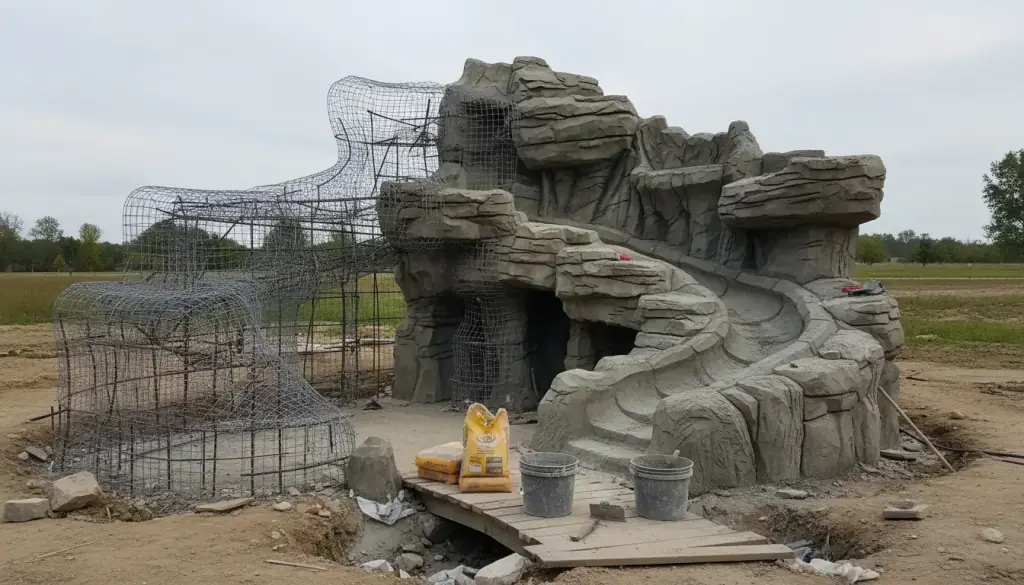
Ask three mini golf builders what a course costs and you'll get three answers, because the word course covers a lot of ground. A flat layout with a few obstacles is one project. A multi-level course with rockwork, waterfalls and a pirate ship is another. The useful question isn't how much, it's what's in the number.
MGC Developers publishes a starting price and a list of what its typical course includes, and it tells you which parts of the build push the budget up the most. Its site says, "Many people consider MGC to be the mini golf course construction innovators." That's their claim to make. Here is how to read the numbers behind it.
What a typical 18-hole course includes
MGC describes its typical turnkey course with these pieces:
- A custom-designed 18-hole course
- Multi-level rockwork
- Waterfalls
- Colored streams and ponds
- Walkways and sidewalks
- Lighting
- A practice putting green
- Top-quality putting turf
MGC publishes that this package starts at about $238,700. The word starts matters. It is a floor for the typical scope, not a quote for your site, and the real figure will move with the design, the ground and how much theming you want. Land for the course is typically one half to three quarters of an acre, and MGC gives a build time of 6 to 12 weeks.
Theming and rockwork drive the number
MGC's FAQ says theming and rockwork are the biggest budget drivers on a course. That fits how these courses are made. Rockwork is typically built over a rebar and wire-mesh armature, then coated with carved concrete and finished by hand, so it is labor and material in a way a flat putting surface is not. Waterfalls, streams and ponds usually add pumps, plumbing and lining on top of that. A flat green is simple by comparison.
That means where you put your theme dollars matters. One way to think about it is to spend the most on the holes people see first and photograph, and keep the rest simpler. That's a design approach, not an MGC rule, and a good designer will have opinions about it. Ask for the design in stages so you can see what each level of rockwork adds.
The unglamorous parts deserve a line in the budget too. Walkways, lighting and the practice putting green are what customers use between holes and after dark, and MGC lists all three in its typical package. A course that looks great at noon and dim at night is only half a course, so ask to see the lighting plan next to the rockwork plan.
Picking a theme, or bringing your own
MGC's page names pirate ships, jungle scenes, tropical islands, mining, a South Sea Pacific setting with erupting volcanoes, and nautical themes. You can leave the theme to MGC or bring your own idea. Either way, a few practical filters help.
- Match the setting you already have. A country dairy bar and a roadside golf center call for different looks.
- Choose a theme with a few big shapes, like a ship, a volcano or a mine head, that read from the parking lot.
- Pick something you can keep fresh with paint, plantings and lighting rather than a rebuild.
- Make sure the story works at every hole, not only the first and the last.
On the first filter, Gretchen B., owner of Mrs. B's Ice Cream & Putt Putt, wrote: "Steve built us a great miniature golf course, blending it in nicely with our existing dairy bar and country setting." That is a design brief in one sentence: the course should look like it belongs where it sits.
What to ask before you compare quotes
- Are the 18 holes, the number of rockwork levels and the water features written into the scope?
- What is included besides the course itself: lighting, walkways, the practice green?
- Who supplies and installs the putting turf, and what grade is it?
- How is the theme developed, and who approves the design before work starts?
- What sits outside the price, such as parking, a counter building or signage?
On payment, MGC states that a deposit of 10% of the budgeted project cost is required, with weekly draws and final payment upon completion. The budget itself comes from the demographics of your site and market. A layout and design are drawn from it, and the deposit schedules the construction date.
To see what a full course includes, go to /services/miniature-golf-courses. Pricing and process questions are covered in the /faq. To talk through a budget and a theme, call MGC at (860) 749-4434.
MGC Developers, (860) 749-4434
Call (860) 749-4434More articles
How Much Land Does Each Attraction Really Need?
Attractions don't scale the way most owners expect, so measure the ground before you fall for a layout.
Concrete or Asphalt for a Go-Kart Track, and What a Tire-Backed Rail Does
Two choices shape how a go-kart track wears and protects riders: the surface under the karts and the wall beside them.